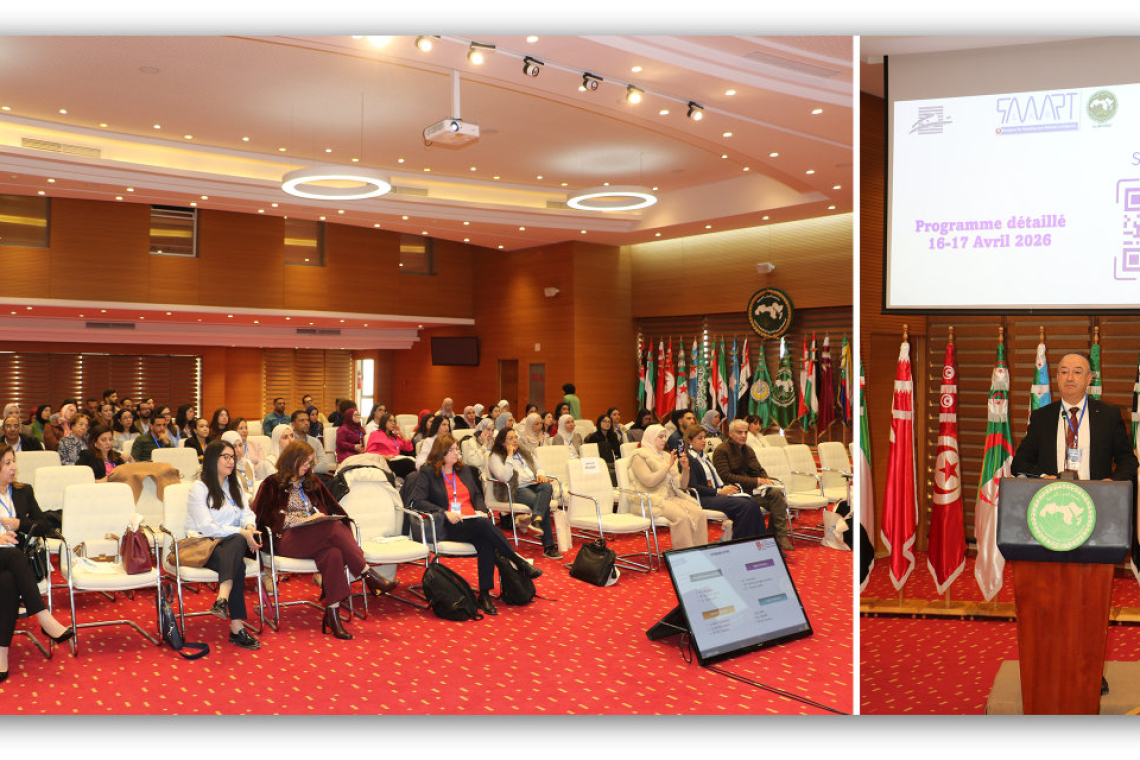
The Arab League Educational, Cultural and Scientific Organization (ALECSO) hosted, on April 16–17, 2026, a scientific forum entitled “Mechanisms for Transferring and Valuing AI Research Outcomes.” The event was organized by the Strategies for Modeling and Artificial Intelligence Smart Lab at the University of Tunis, in partnership with ALECSO. It brought together prominent professors, researchers, experts, and other stakeholders from various academic, institutional, and economic sectors.
In his opening remarks, Dr. Mohamed Jemni, Director of ICT at ALECSO, conveyed the greetings of H.E. Dr. Mohamed Ould Amar, Director-General of ALECSO, to all participants, along with his sincere wishes for the success of this scientific event. He underscored the importance of the forum amid rapid advancements in AI technologies and the promising opportunities they offer to drive profound transformations in knowledge, production, innovation, and decision-making.
Dr. Jemni stressed that the challenge is no longer limited to producing scientific knowledge in artificial intelligence, but also lies in transferring research outcomes from the academic sphere to real-world application, impact, and development, as well as in valuing those outcomes economically, socially, and technologically in ways that serve societies, institutions, and development priorities. He emphasized that scientific research fulfills its full mission only when it becomes a driver of innovation, a source of practical solutions, and a catalyst for improving services, policies, and products.
Dr. Jemni reaffirmed ALECSO’s commitment to maintaining its leading role in keeping pace with rapid developments in artificial intelligence, by supporting Arab initiatives related to scientific research, innovation, and digital transformation, while seeking to frame this field within an Arab vision grounded in responsibility, fairness, and respect for human values. In this regard, he highlighted the “ALECSO Charter on AI Ethics” as a comprehensive ethical and guiding framework for the responsible use of AI in education, culture, and science across the Arab world.
The forum addressed a range of scientific themes reflecting the interdisciplinary nature and far-reaching impact of artificial intelligence. These included the valuing of AI research, recommender systems, agent-based AI applications, e-learning, transportation and supply chains, decision-making and financial security, cloud and distributed computing, healthcare service management, and sustainability.
This forum provided a significant scientific platform for exchanging expertise and insights, and for building bridges of communication among researchers, support institutions, and the public and private sectors. The aim is to develop effective mechanisms for technology transfer, foster innovative projects, support young researchers, and enhance the societal impact of universities and research centers.