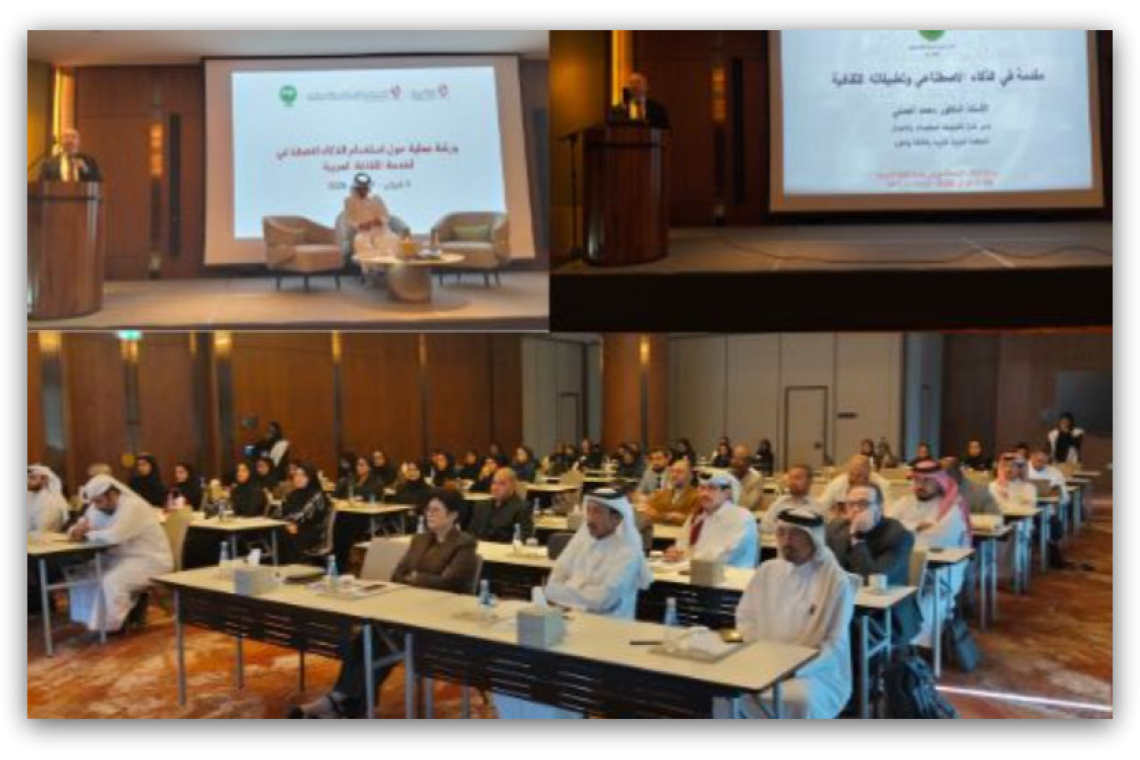
The Arab League Educational, Cultural and Scientific Organization (ALECSO), in collaboration with the Qatar National Commission for Education, Culture and Science and the Ministry of Culture of Qatar, launched, on February 9, 2026, in Doha, Qatar, a workshop entitled : “Using Artificial Intelligence to Serve Arab Culture.” The event brought together prominent experts, researchers, and specialists in artificial intelligence, digital transformation, and cultural affairs from various institutions in Qatar.
The opening session was attended by representatives of the organizing and partner institutions, alongside experts and other participants from across the Arab world.
In his opening remarks, Mr. Abdulrahman Abdullah Al Dulaimi, Director of the Department of Culture and Arts at the Ministry of Culture of Qatar, welcomed all participants, and reaffirmed his country’s commitment to supporting Arab cultural initiatives and harnessing modern technologies, especially artificial intelligence, to serve culture, heritage preservation, and creative industries.
Ms. Moza Al-Humaidi, representing the Qatar National Commission for Education, Culture and Science, highlighted the importance of institutional partnerships in ensuring the success of such intellectual and scientific events. She emphasized the role of National Commissions in linking local efforts with Arab and regional projects, and in promoting digital innovation in cultural and educational sectors.
Dr. Mohamed Jemni, Director of ICT at ALECSO, conveyed the greetings of ALECSO’s Director-General, H.E. Dr. Mohamed Ould Amar, to all participants. He stressed ALECSO’s commitment to keeping pace with the fast-paced digital transformations and integrating AI technologies into its cultural strategies and programs to serve the Arabic language and strengthen Arab culture’s presence in the digital space, while underscoring the ethical and human dimensions in the use of these technologies.
The organizers emphasized, in their remarks, the growing importance of employing AI to support Arab culture, safeguard heritage, and foster cultural creativity; thereby aligning with global digital transformations while preserving Arab cultural and linguistic identity.
The first day featured scientific presentations and specialized sessions on AI concepts and applications in the cultural field, including digitization of cultural content, knowledge management, and preservation of tangible and intangible heritage. Participants also reviewed pioneering Arab and international experiences in this regard.
Discussions enabled participants to exchange views on opportunities and challenges of AI in the cultural sector, stressing the need for joint Arab strategies, stronger institutional cooperation, and capacity-building to ensure responsible and effective use of these technologies.
The workshop continued over two days and concluded with practical recommendations to support the use of AI in serving Arab culture, in such a way as to promote sustainable cultural development and enhance the presence of Arab culture in the global digital space.